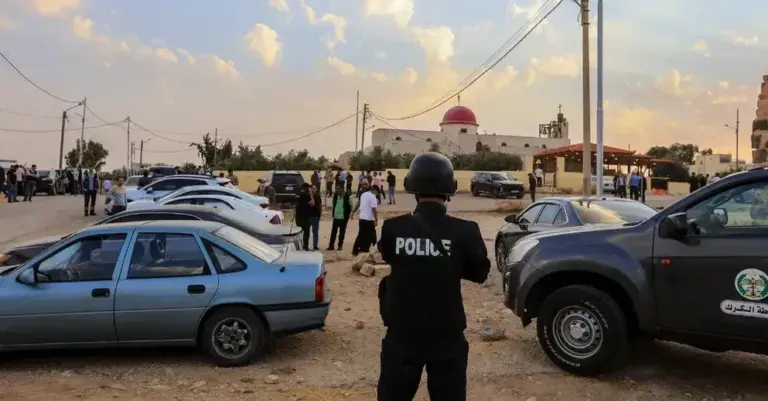
A military tribunal in Jordan has sentenced three men to death following a brutal assault on a Greek Orthodox church that left nine people dead and dozens more injured. The convictions come after a swift legal process focused on violations of national antiterrorism laws, including the possession of weaponry intended for terror and the promotion of extremist ideologies. While the official statements from the Jordanian Armed Forces did not name a specific organization behind the plot, the ruling marks a severe response to one of the most violent militant attacks seen in the kingdom in recent years.
The suspects were apprehended in late October during a pre dawn raid in the southern province of Karak, where they engaged security forces in a shootout before being captured in an abandoned residence. This region is notable for its historic Christian community, some of whose roots stretch back over fifteen centuries. In the wake of the tragedy, King Abdullah II took to social media to condemn those driven by divisive ideologies, promising that such hatred would find no tolerance within his borders. Although motives remain officially unconfirmed, Prime Minister Jafar Hassan linked the violence to takfiri extremism, a brand of radicalism typically associated with militants who target perceived heretics.
This judicial decision follows a period of heightened tension and military action, including Jordanian airstrikes against suspected terrorist cells in southern Syria shortly after the massacre. Those strikes drew international criticism when reports emerged that several civilians, including children, were among the casualties. Despite these controversies, Jordan remains committed to protecting its diverse religious landscape; while Islam is the state religion, Christians hold protected status and influential roles in government and parliament.
The return to capital punishment is likely to draw scrutiny from global observers. Only months ago, Jordan ended a nearly decade long moratorium on executions by hanging six individuals tied to terrorism and narcotics trafficking. That move sparked condemnation from human rights organizations and the European Union alike. For now, however, the focus remains on justice for the victims in Karak as the three convicted men prepare their appeals against the death sentences.